


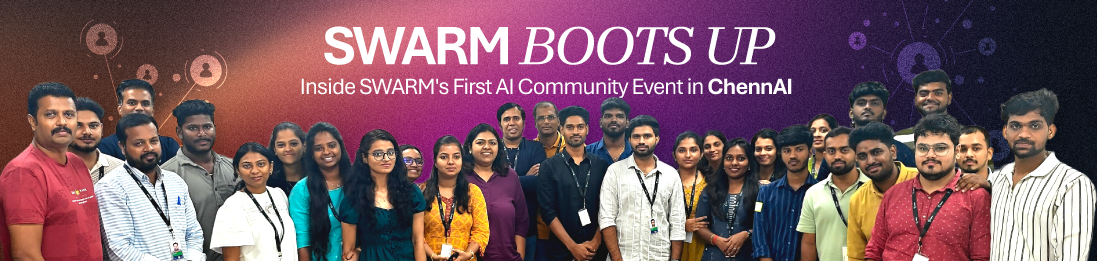
On August 28th, a room full of curious minds and a screen full of just as many - came together for SWARM, our first-ever AI community event. The event was part talk, part conversation, part celebration, and mostly a proof of concept for something we've been wanting to build for a while - a real, living community around people building with AI.
And while we had an agenda with speakers, polls, a quiz and networking planned, the real goal was to create a space where like-minded people could come together, exchange ideas, ask questions and simply connect.
Why SWARM?
For people building with AI, keeping up isn't just about reading the latest article or attending another webinar. It's about having conversations with people who are experimenting, building, learning and figuring things out too.
The idea behind SWARM is to create a living community around AI - a space for practitioners, enthusiasts, leaders and curious minds to come together and learn from one another.
“This is not another one-way presentation or another listen-to-a-speaker-and-log-off type of session; rather a community of people building with AI - not just within Galent - but across cities and across the country, so we can learn from each other, spark ideas t SWARM was designed to feel like an experience. From the moment the doors opened, the room came alive with SWARM branding across the screens, followed by an icebreaker and a poll that got the room talking, laughing and engaging before the formal programme had even begun.
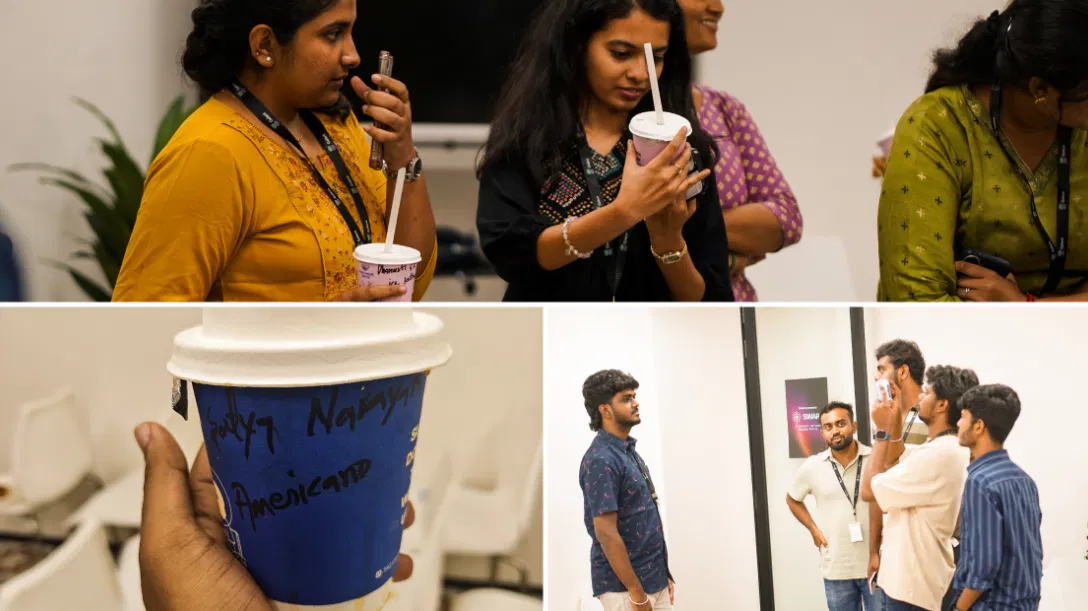
Ram opened SWARM with a welcome that went beyond saying hello. He set the context for why this community matters and what SWARM could become. And with everyone warmed up, it was time for the main event.
“This is not another one-way presentation or another listen-to-a-speaker-and-log-off type of session; rather a community of people building with AI - not just within Galent - but across cities and across the country, so we can learn from each other, spark ideas together, and grow together.”
- Ramakrishnan Venkatasubramanian, CTO, Galent
From the moment the doors opened, SWARM was about bringing people together creating a space to connect, exchange ideas, and start the conversation.
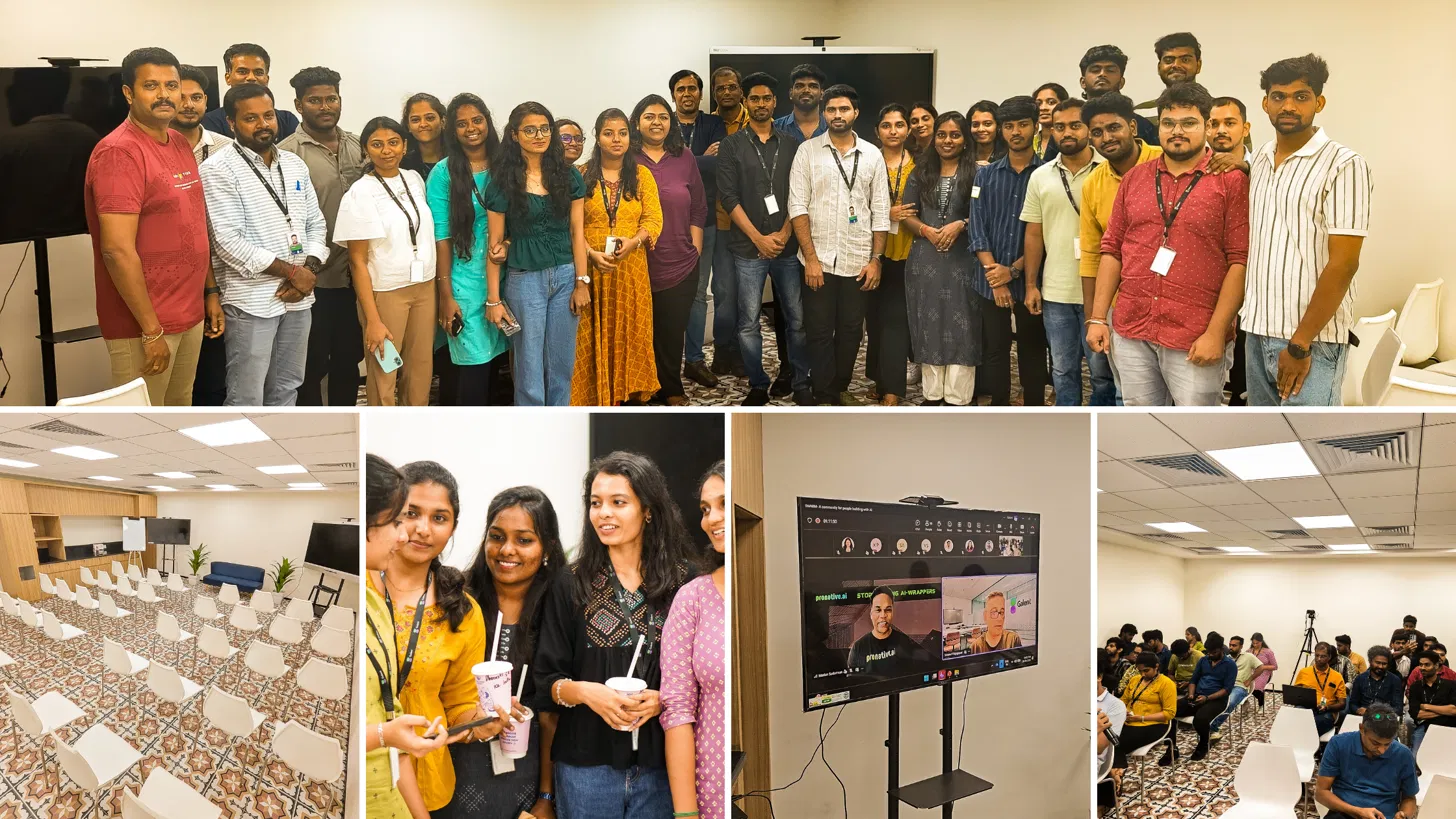
The Conversation That Got SWARM Thinking
For 30 minutes, the conversation moved beyond familiar AI headlines and into Agentic Graph Engineering and what it means for people actually building with AI.
Madan Sundaram, Founder & CTO of Pro Native AI, introduced a different way of thinking about AI systems: as coordinated workflows of specialised agents, rather than putting everything on the shoulders of a single, increasingly capable model.
The highlight of the session wasn’t just the concept - it was seeing it in action. In a live demo built on the Microsoft Agent Framework, Madan walked through a multi-agent development workflow, with architect, developer, and reviewer agents working together as part of an orchestrated system.
The audience could watch the workflow unfold in real time, from architecture and code generation through review, while observability made it possible to see what was happening inside the agents.
But the bigger idea went beyond the demo. As Madan put it: “The future isn’t about having one agent that does everything. It’s about specialized agents working together, orchestrated through a graph, with the visibility to understand and improve everything happening along the way.”
That was the conversation Madan brought to SWARM. Or perhaps, it was exactly the kind of conversation SWARM was created to have.
Watch Madan’s full session:
Questions came flying in from the room and online, turning the session into a real conversation.
Then came the quiz with confident answers and some very confident wrong answers.
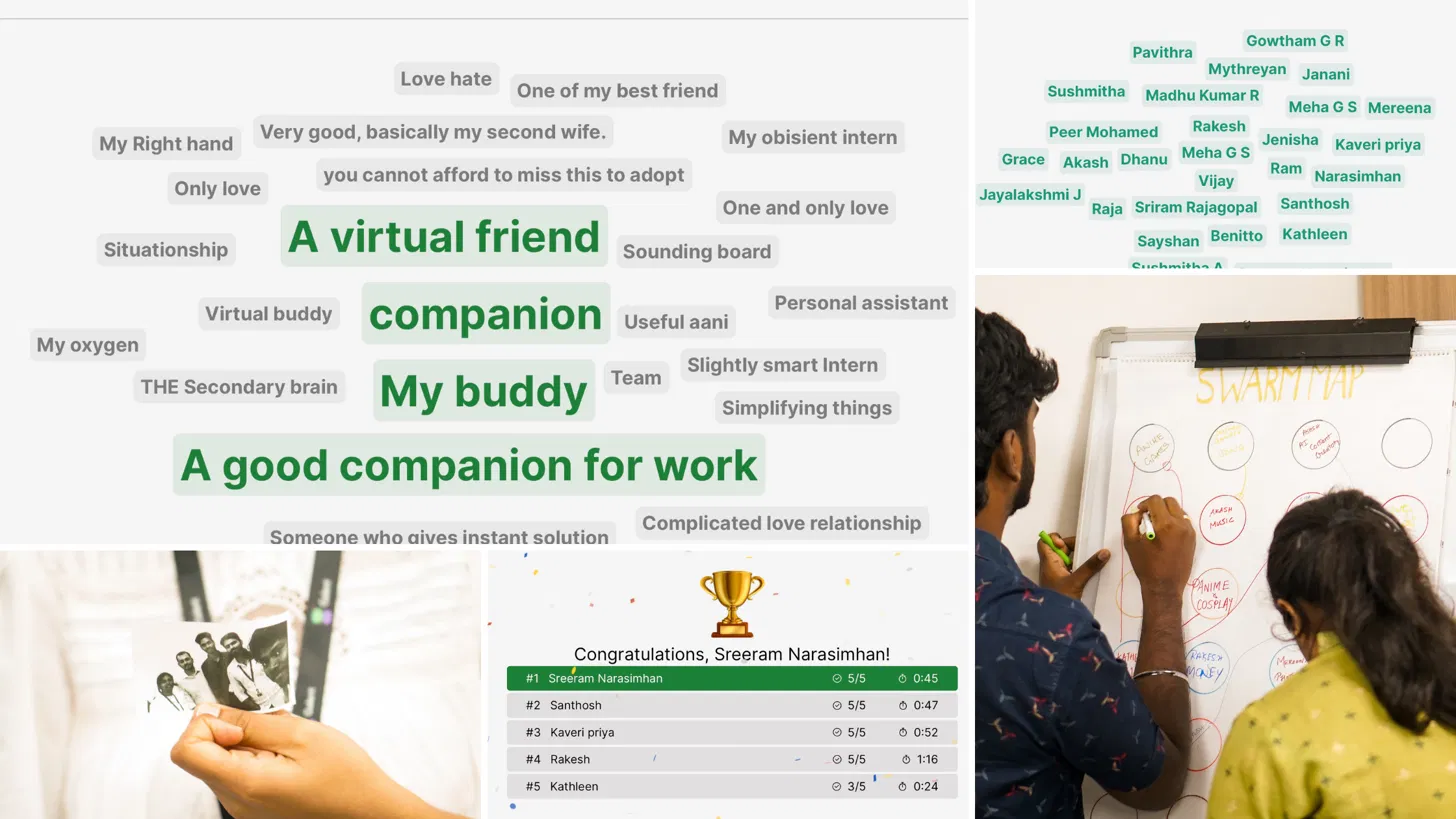
A moment to celebrate our newly certified community members, before we wrapped up the official program